What is virtual running?
· Karl
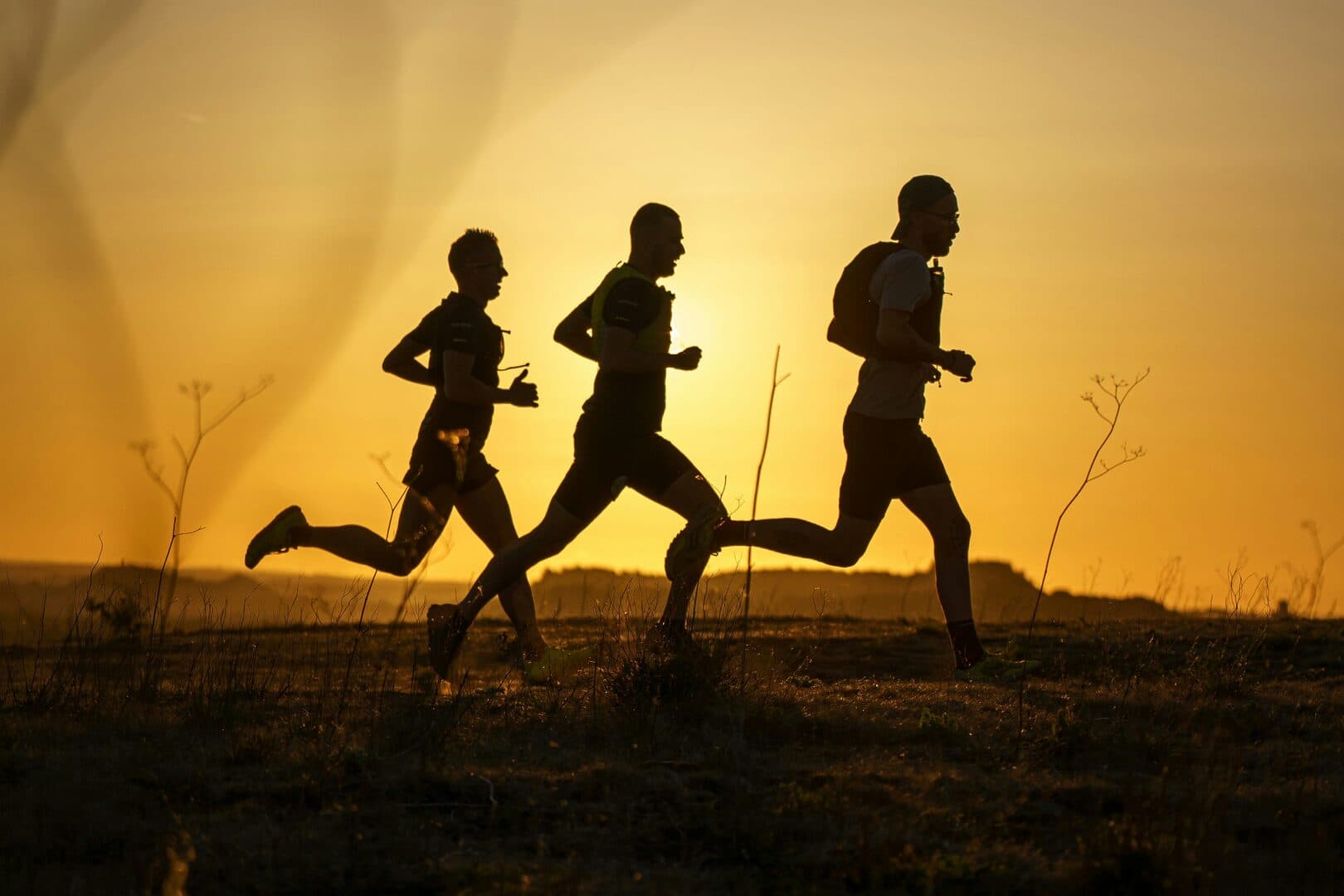
Most running goals are events. You enter a race, it happens on a Sunday in April, and then it is over and you need another one. That works, but it leaves a lot of the year with nothing in particular to aim at — and the winter weeks, when getting out of the door is hardest, are exactly the weeks furthest from race day.
Virtual running is the other way round. You pick a route somewhere in the world — a famous trail, a long road, a pilgrim path — and you run it from where you already live, a few kilometres at a time, for as long as it takes. Every run you do anyway counts towards it. The goal is not a date in the calendar, it is a line moving across a map.
What virtual running actually is
A virtual route is a real route, mapped properly, that you complete by distance rather than by being there. Route 66 is 3,788 km from Chicago to Santa Monica whether you drive it or not; run 3,788 km on your own roads and you have covered the same ground. The route does not move, the mapping does not cheat, and your progress along it is just the sum of the running you have actually done.
What it is not is a virtual race. Nobody is timing you, there is no field to finish ahead of, and there is no cut-off. A route that takes two years is meant to take two years.
It also is not treadmill running, indoor cycling, or anything that requires a screen in front of you. You run outside, in the normal way, on your normal routes. The virtual part is only where the distance gets counted.
How it works
You connect your Strava account once. From then on In the Long Run reads the distance and date of your runs, adds up each day's total, and moves you along whichever route you have picked. There is nothing to log by hand and nothing to remember after a run — a run usually shows up on your route within a day of reaching Strava.
What you see is a map with your progress drawn on it: how far along you are, how much is left, and your weekly and monthly totals beside it. On some routes the map also fills in as you go, unlocking the landmarks you would be passing if you were really out there — cities, mountains, waterfalls — one at a time as you reach them. The road ahead of you stays empty until you earn it.
Your progress is private by default. There is no public profile, no feed and no leaderboard of strangers; if you want to show someone how far you have come, you share a picture of the map deliberately, and that is the only time anything leaves your account.
Choosing a first route
The honest advice is to pick something you can finish, because the first completed route is what convinces you the next one is possible. A few shapes to choose between:
- A few hundred kilometres. Kungsleden, the King's Trail through northern Sweden, is 555 km — a few months of ordinary running, and a real route rather than a token one.
- About a year. The Via Francigena, the medieval pilgrim road from Canterbury to Rome, is 2,136 km, which is roughly a year at 40 km a week. Long enough to cross two changes of season, which is the real test.
- Two or three years. Te Araroa runs the length of New Zealand in 3,112 km, Kashmir to Kanyakumari the length of India in 3,604 km, and the Pacific Crest Trail is 4,200 km from Mexico to Canada. All three are multi-year projects that still move visibly every single week.
- Absurd. The Pan-American Highway is 27,918 km, Alaska to Argentina, and takes about eleven years at 50 km a week. It exists for groups, and for the very stubborn.
It is also worth picking a route whose shape you will enjoy watching. A long thin country gives you something new every week; a route that spends six months crossing the middle of a continent asks more patience of you. Some are not traverses at all — the Great Wall follows a frontier rather than running between two towns, and Highway 1 is a lap that finishes where it started. Browse the full list and see which map you want to look at for the next year.
How long a virtual route takes
The arithmetic is simple and worth doing before you commit, because the difference between a route you finish and a route you abandon is usually that one of them matched the running you were already doing.
At a steady 30 km a week you cover about 1,560 km a year. At 50 km a week it is about 2,600. So a 3,000 km route is two years of the former or a bit over one of the latter, and there is no need to be ambitious about the number — the running you actually do beats the running you planned.
That is the whole reason the routes on the app are long. A target you can reach in a fortnight stops motivating you the moment you reach it. A target three years out is still there on a wet Tuesday in February, and the run you do that evening still counts towards it.
Running a virtual route with other people
A long route splits well. In a group you can run one of two ways: a relay, where everyone's distance is pooled and the group moves as one, or a race, where each member runs the same route separately and you can see who is ahead.
Relay mode is what makes the enormous routes reasonable. Twenty people at 50 km a week finish the Pan-American Highway in about six months rather than eleven years, and everyone involved gets to say they ran from Alaska to Argentina. For a running club it is a better shared goal than a spreadsheet of weekly totals, and it works just as well for four friends or a family.
Starting
Pick a route, connect Strava, and then carry on running exactly as you were. That is genuinely the whole thing — the app's only job is to make the kilometres you were already running add up to somewhere.
If you want you can add your email address and get a monthly reminder on your progress. It might motivate you to put on your running shoes and keep your momentum going. Struggling with an injury this season? Remember that the race is long, and in the end it is only with yourself.
Find a route and start, or read the help pages if you want the details first.
Image credit: NHP&Co | Unsplash
Blog posts are written by and in collaboration with large language models (LLMs) / AI.