The Berlin Wall - run the 165 km Berliner Mauerweg
· Karl
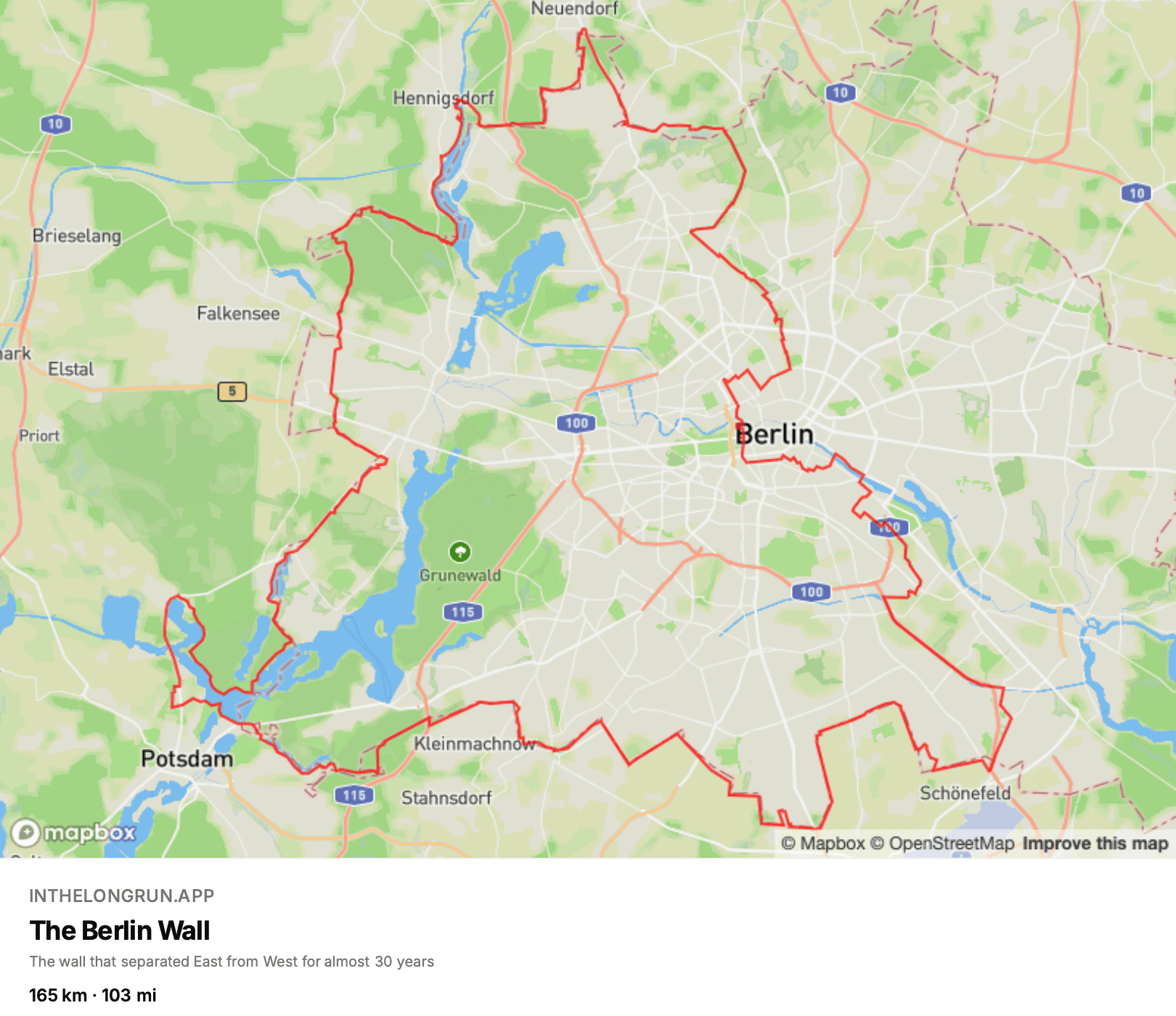
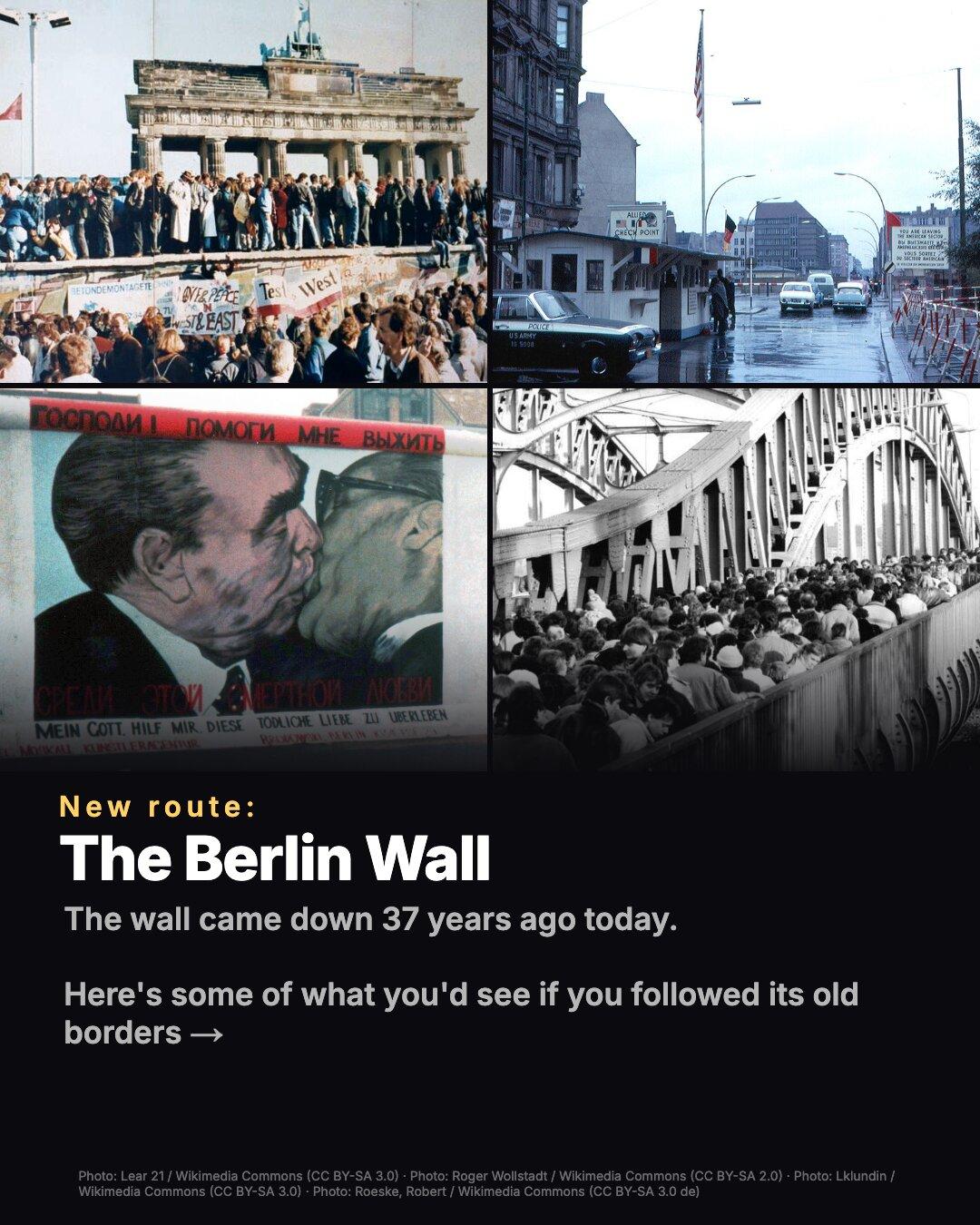
On the night of 9 November 1989 the Berlin Wall came down. Thirty-seven years later to the day, we have added it as a new route. The Berlin Wall follows the Berliner Mauerweg, a marked trail along the old border strip that runs all the way round what was West Berlin. You can now run it virtually from wherever you live, one run at a time.
How long was the Berlin Wall?
The wall went up overnight on 13 August 1961 and stood for 28 years. People often picture it splitting the city down the middle, but it ran all the way round West Berlin, cutting it off from East Berlin and from the East German countryside around it. Officially it was the Anti-Fascist Protection Rampart, though it was built to keep East Germans from fleeing west. At least 140 people died trying to cross it.
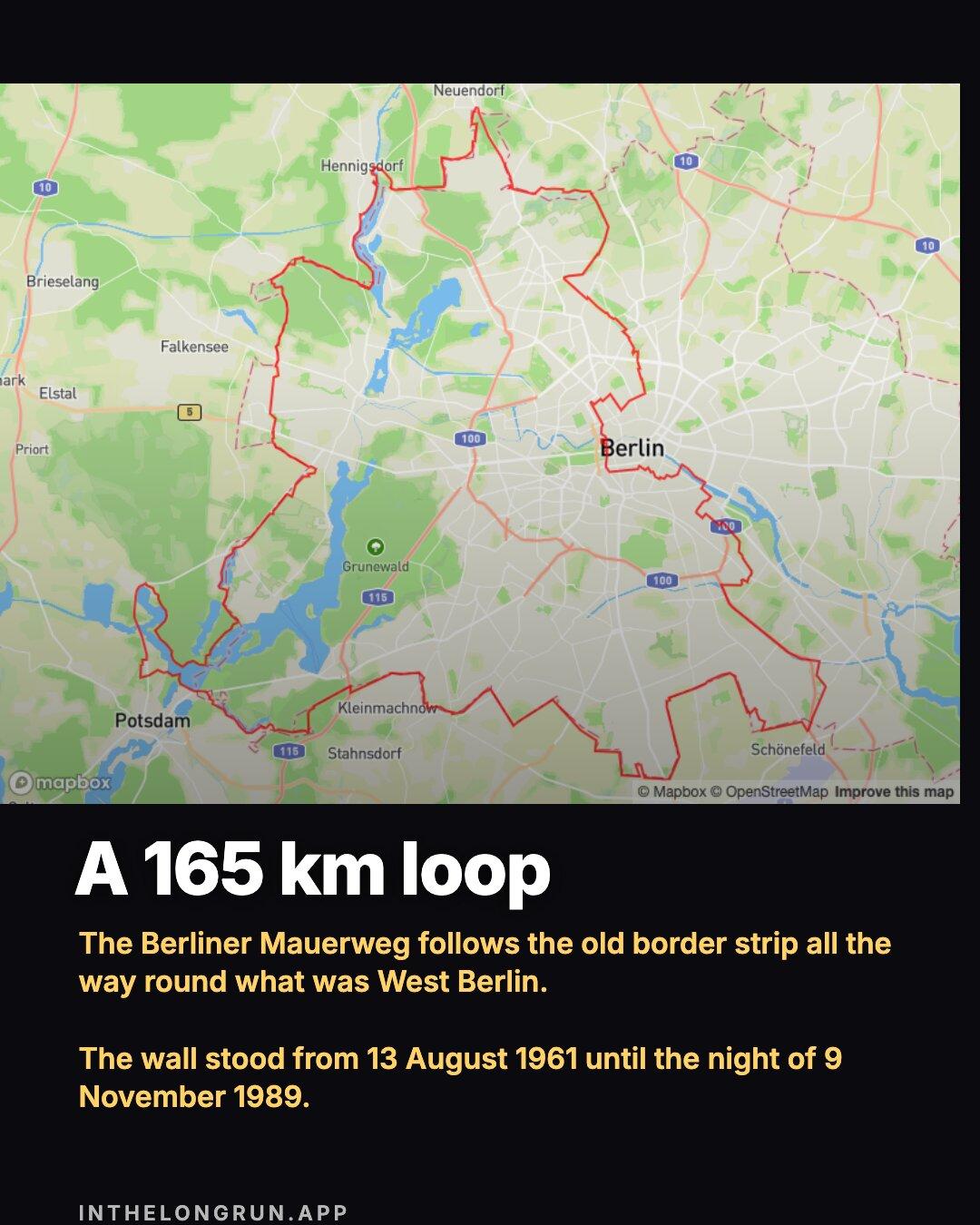
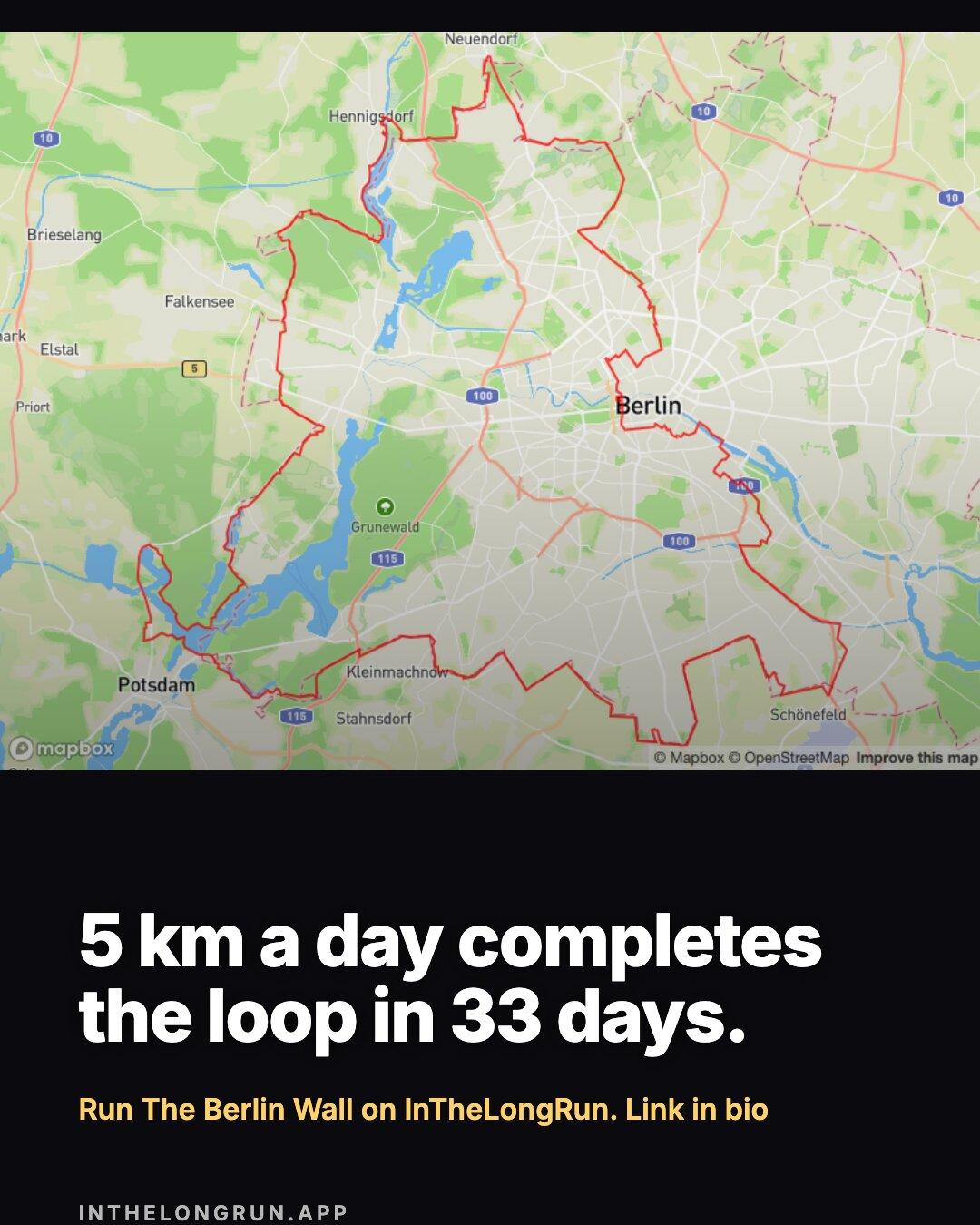
Our route is 165 km (103 miles), a closed loop. Most of it is on the Mauerweg, which keeps to the old patrol road wherever it can, through city streets, along rivers and lakes, and through the forests and fields on the edge of Berlin.
Along the old border strip
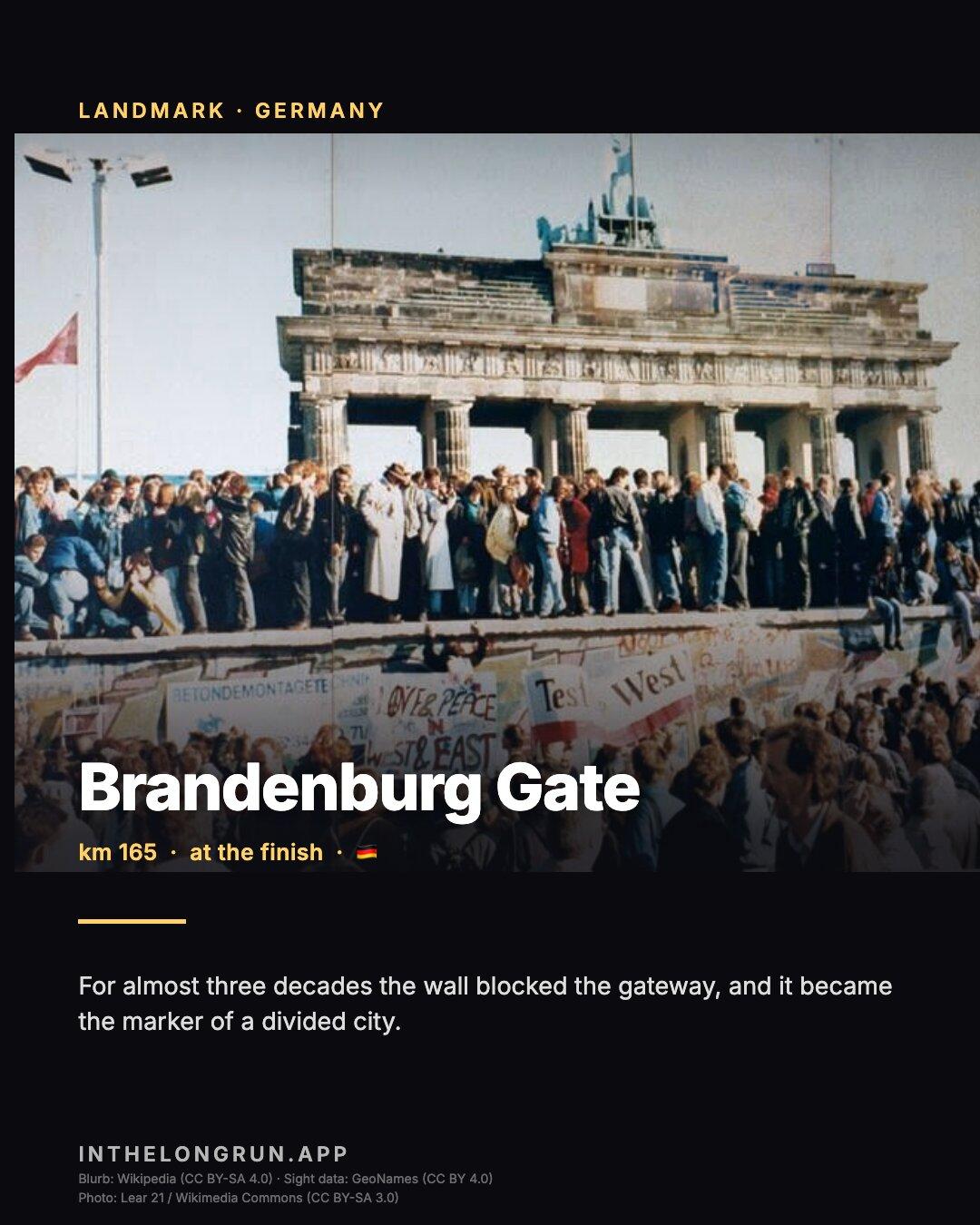
Our loop starts by the Brandenburg Gate and goes clockwise.
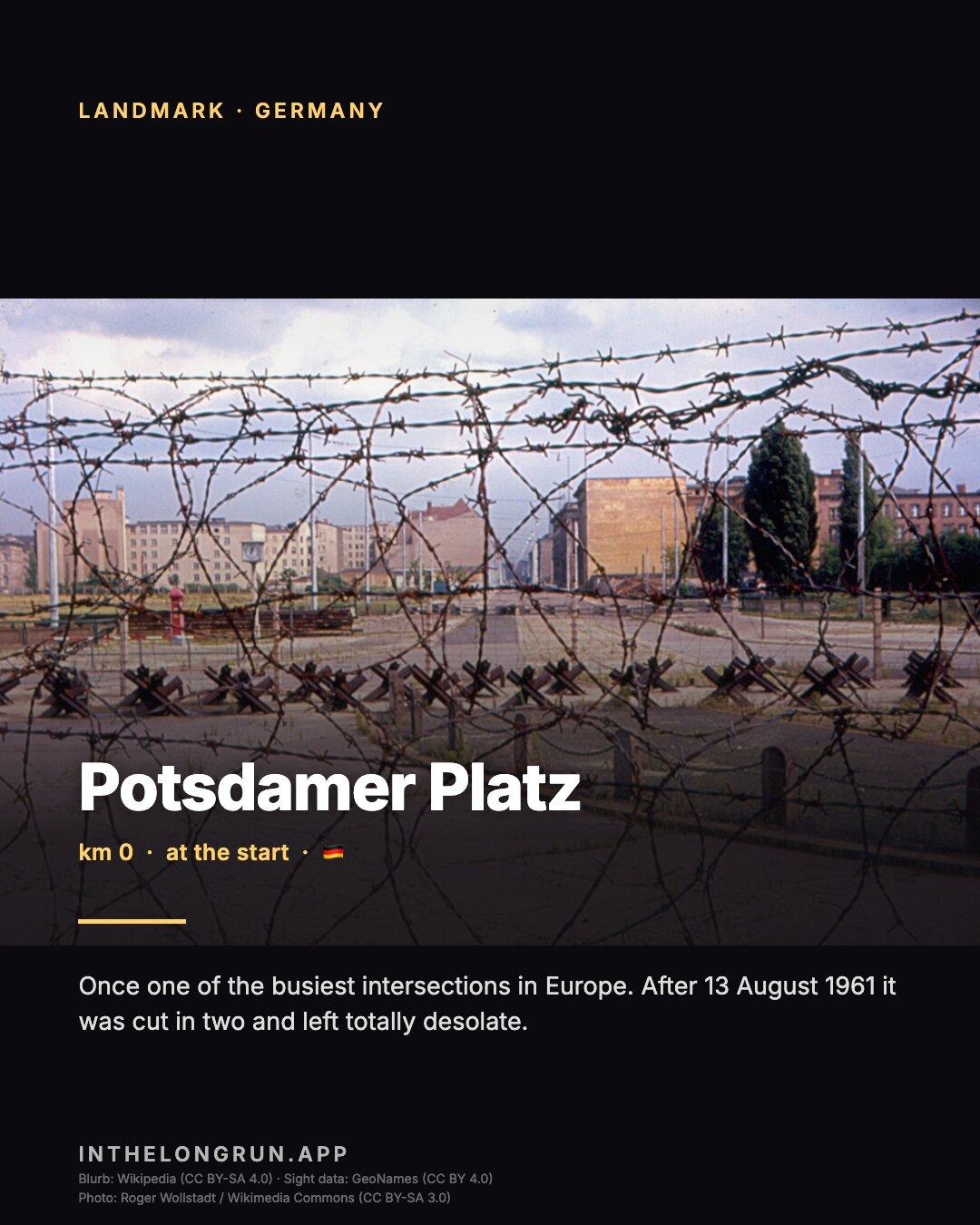
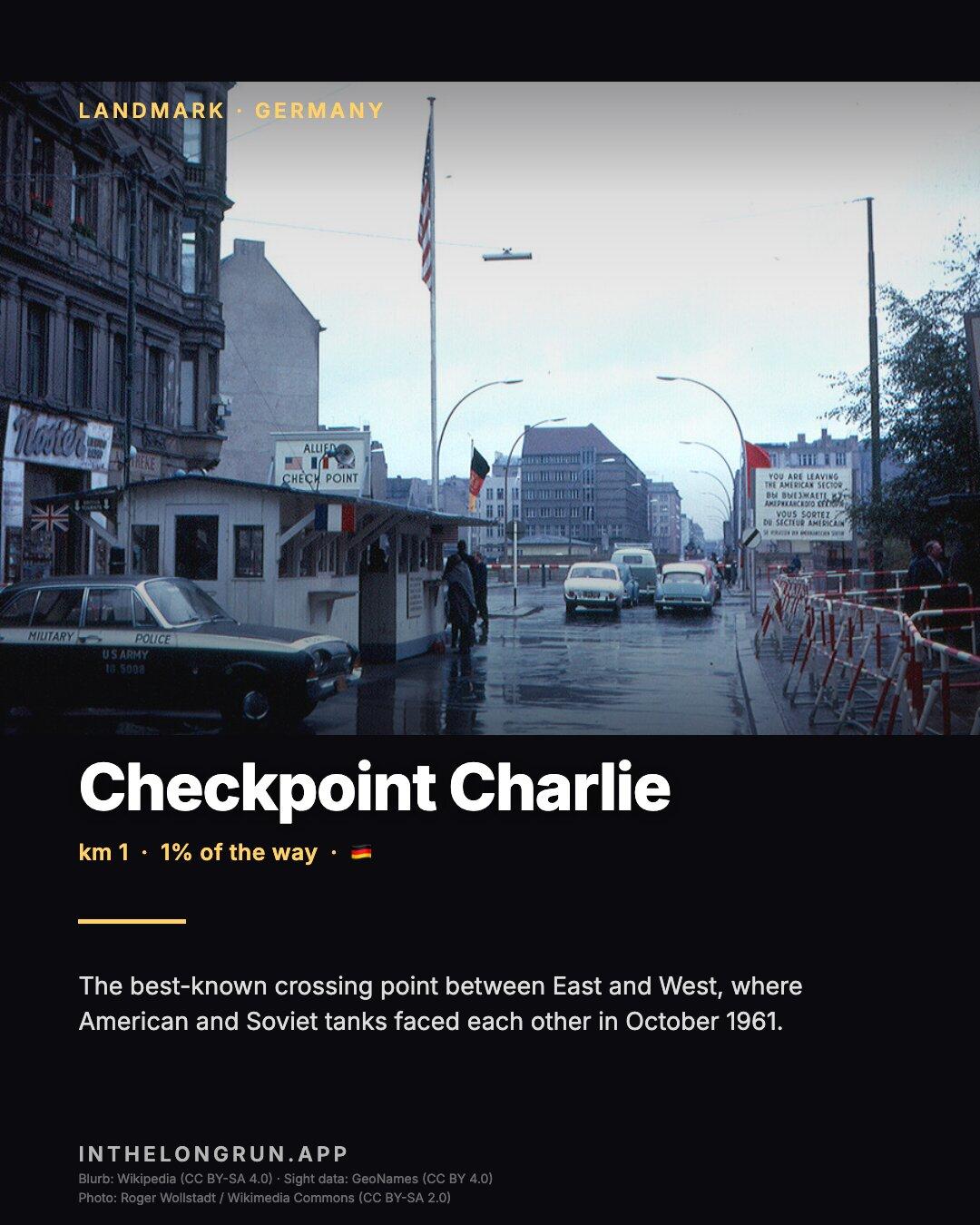
- The centre. South first, to Potsdamer Platz. When the wall went up through the middle of it, one of the busiest squares in Europe was left a wasteland. From there you go past Checkpoint Charlie and its museum, the crossing for foreigners and Allied soldiers, where American and Soviet tanks faced each other in October 1961.
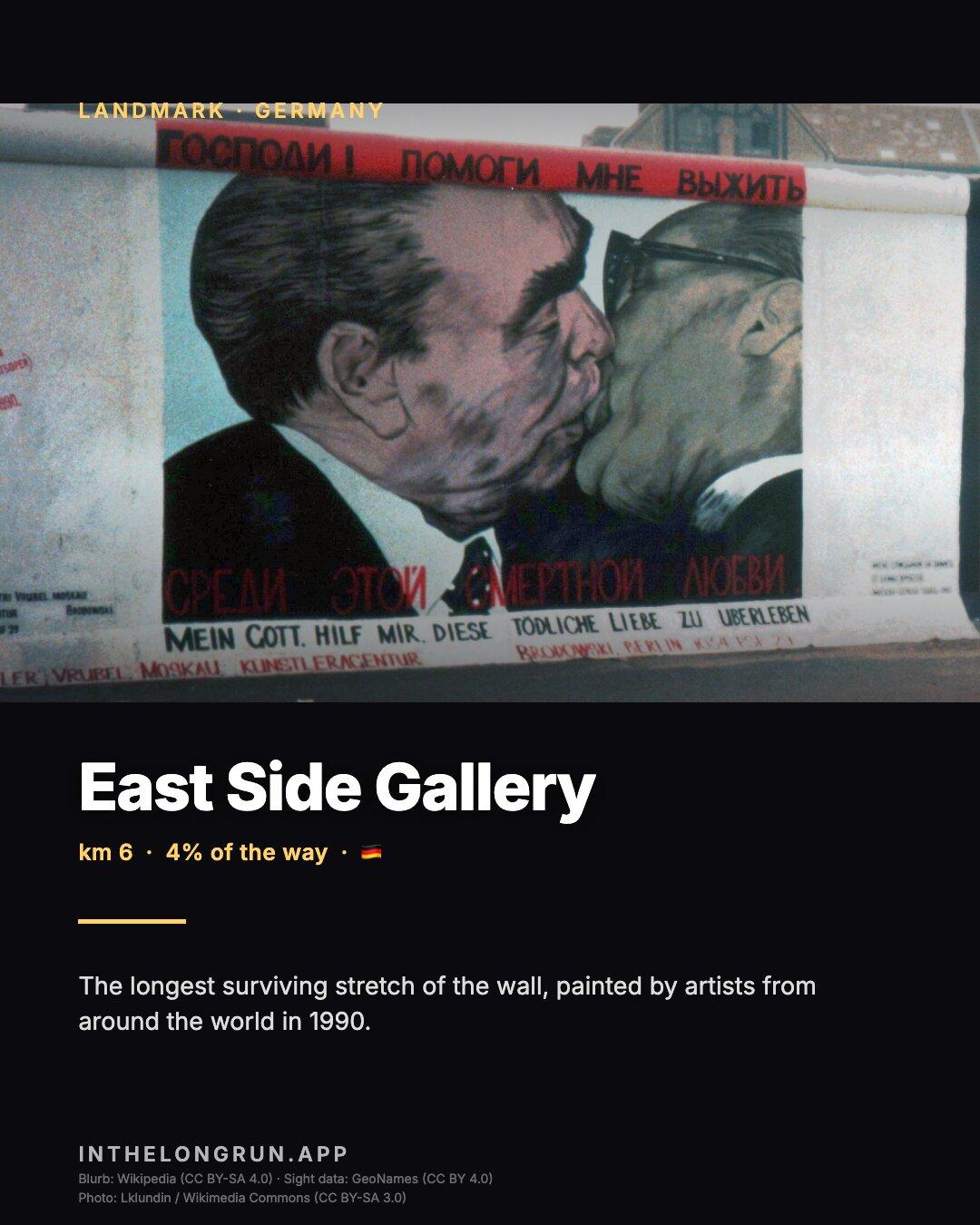
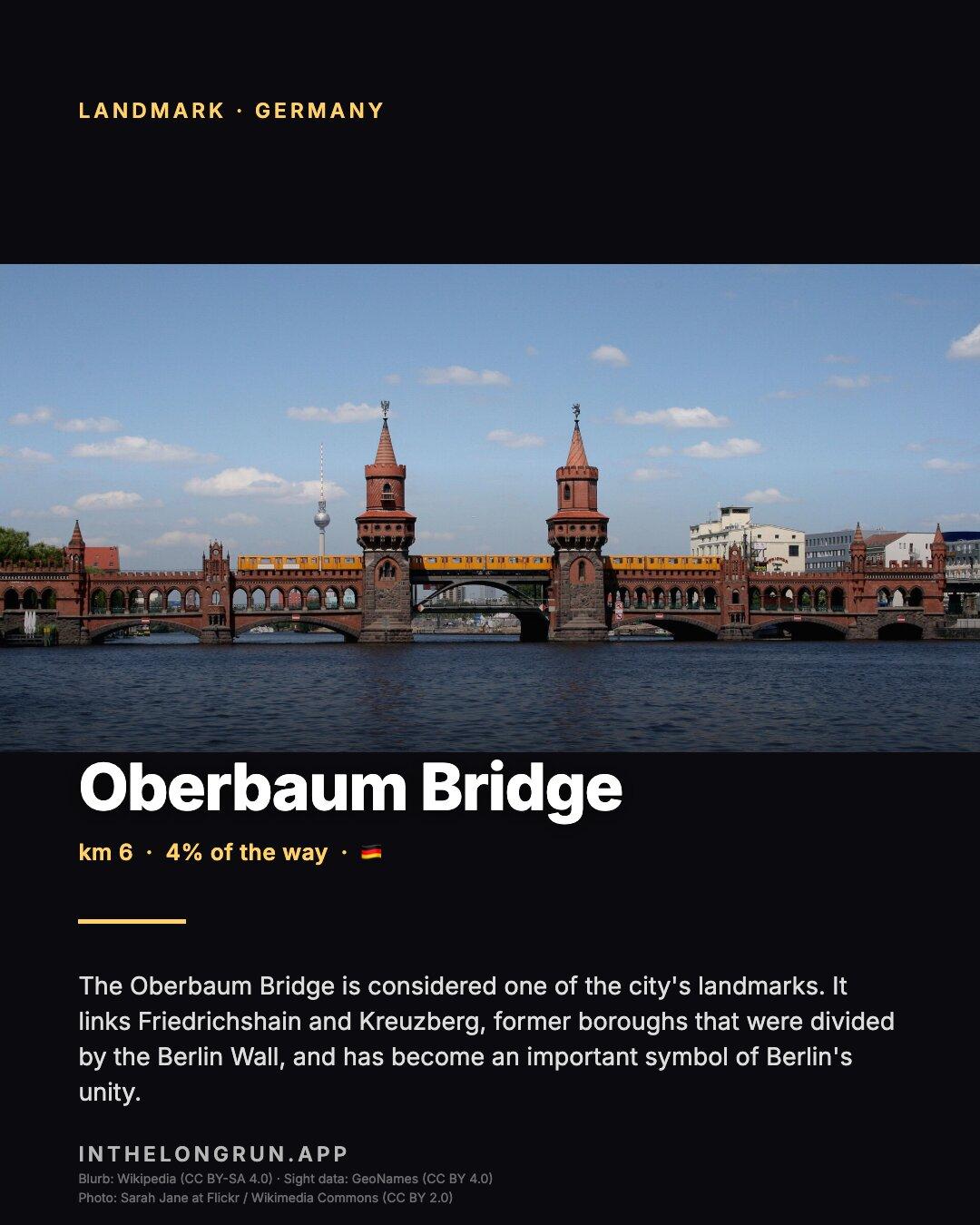
- Along the Spree. East to the river, past the Baumhaus an der Mauer, a garden shack built on a scrap of no man's land, to the East Side Gallery and the Oberbaum Bridge. Here the river itself was the border.
- The south east. Through Treptow, past the ten-metre watchtower in the Schlesischer Busch and the old crossing on Sonnenallee, then out to the city limits.
- The southern edge. Along the outer ring, the border between West Berlin and East Germany rather than between the two halves of the city. It passes Checkpoint Bravo at Dreilinden, the motorway crossing for traffic heading west, and Steinstücken, a tiny West Berlin exclave that sat inside East Germany until a road was built to it in 1972.
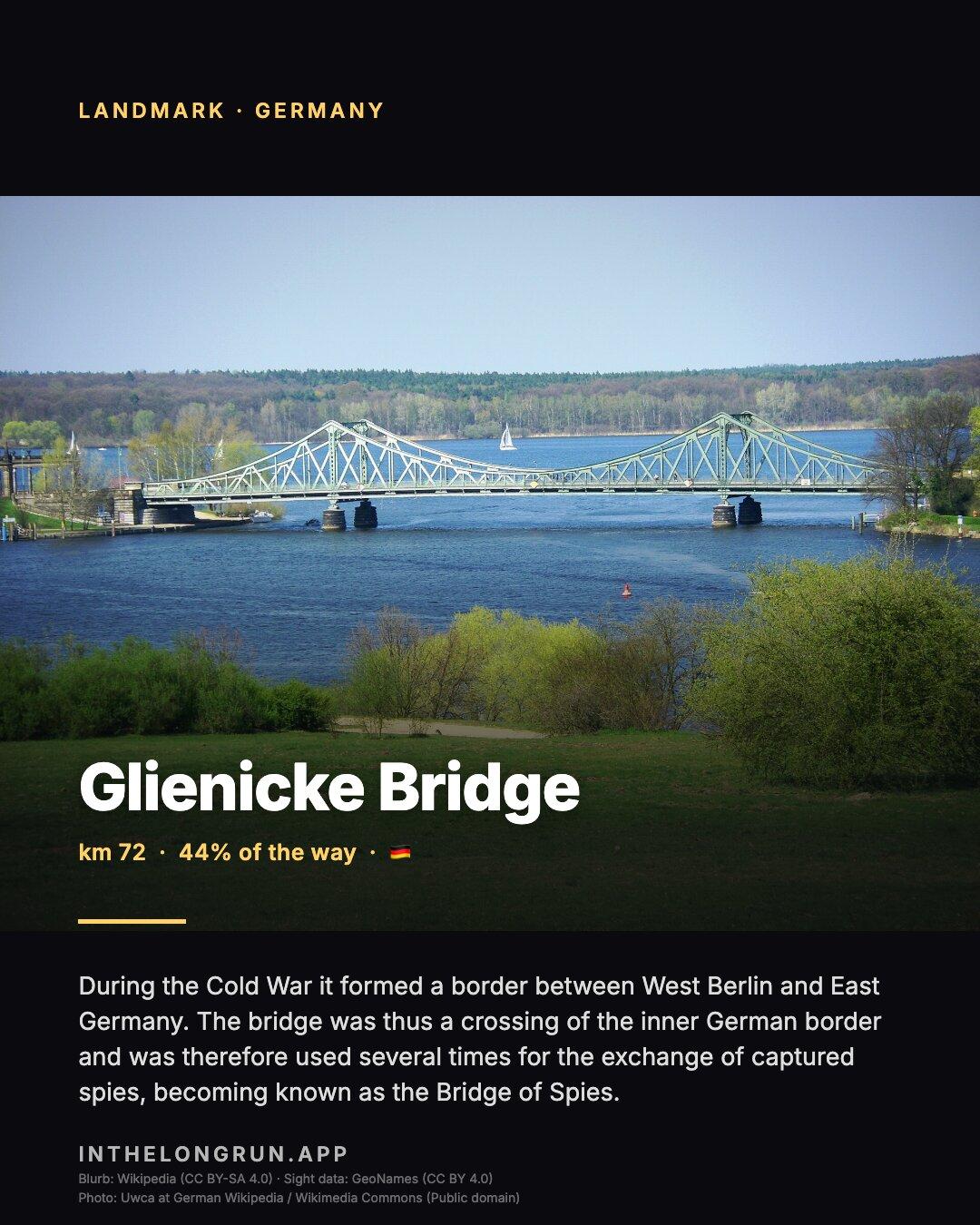
- Potsdam and the Havel. Over the Glienicke Bridge, where captured spies were swapped during the Cold War, and past the Church of the Redeemer at Sacrow, which spent the wall years stranded in the border strip. Then north along the lakes of the Havel to the watchtower at Nieder Neuendorf, now an exhibition on the border defences.
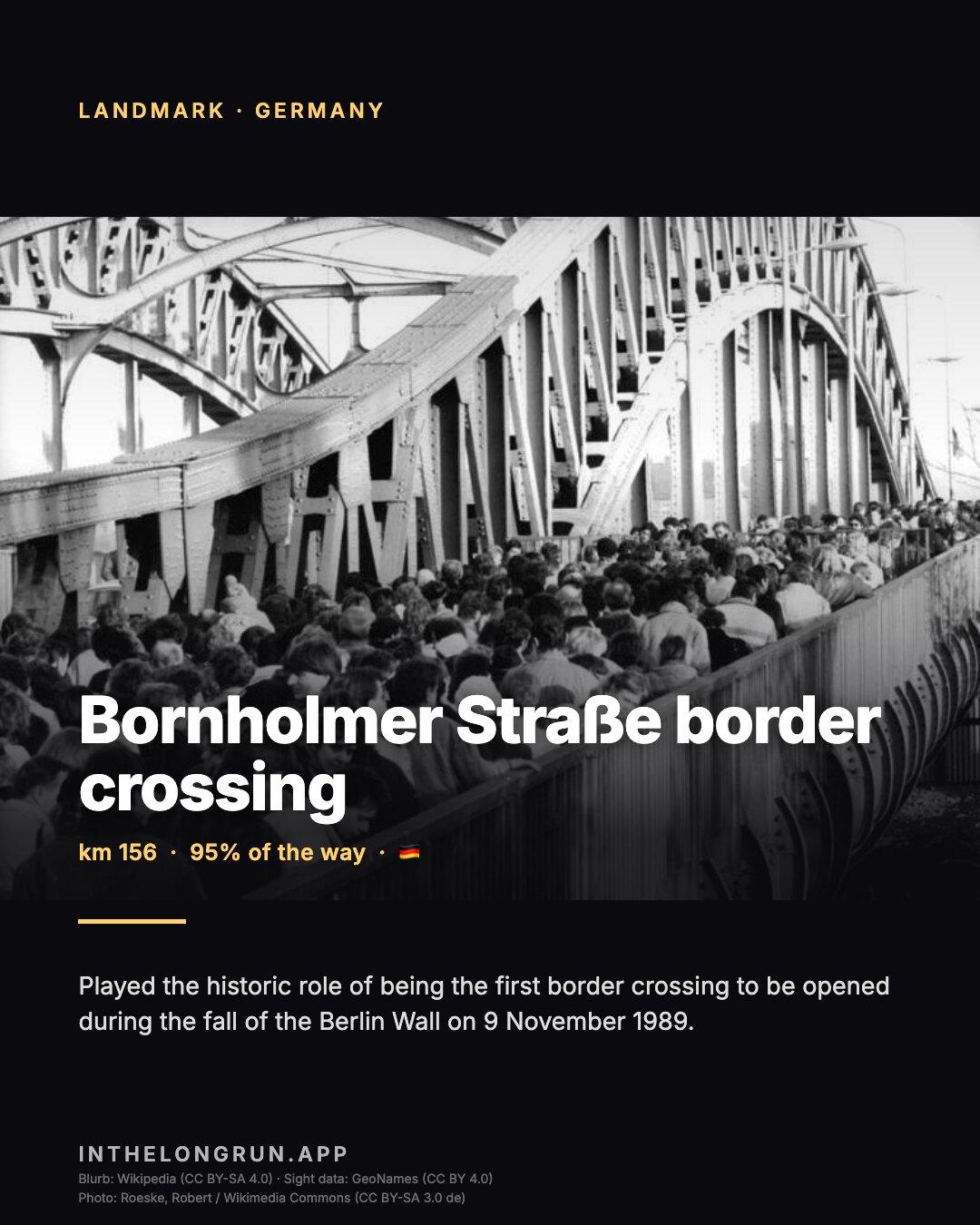
- The north. Back towards the city through the Volkspark Schönholzer Heide to the Bornholmer Straße crossing. On the night of 9 November 1989, this is where the guards gave way and opened the gates first.
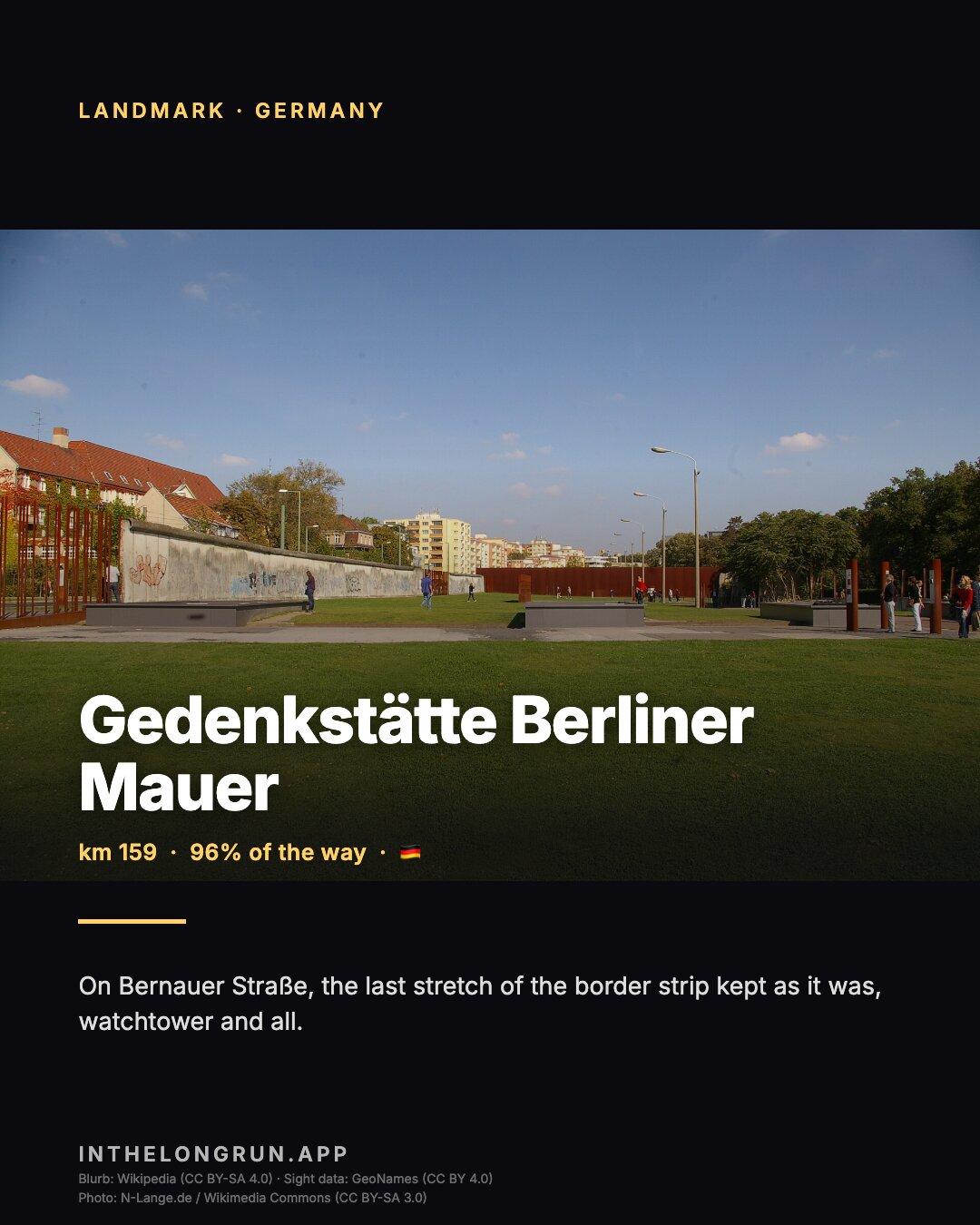
- Bernauer Straße and home. Past Mauerpark to the Berlin Wall Memorial on Bernauer Straße, where a stretch of the border strip is kept as it was, watchtower and all, next to the Chapel of Reconciliation. The East German government blew up the church that stood there in 1985. Then on past the Invalids' Cemetery and the Tränenpalast, the "palace of tears" where East Berliners said goodbye to visitors from the West, to the Reichstag and back to the Brandenburg Gate.
All of these are marked on the route map, they unlock as you progress along it, (read more about the points of interests feature ).
How long does it take to run the Berlin Wall?
People do run the whole Mauerweg in one go. There is a 100 mile ultramarathon along it every year. You can take it more slowly, at your normal training pace, and our app adds up the kilometres:
- 5 km a day gets you round in 33 days.
- 20 km a week takes about two months.
That makes it the shortest route we have, a good first virtual route or a goal for a month or two. If you want something longer afterwards but want to stick to a wall theme the Great Wall of China is a little over forty times the distance.
How to run the Berlin Wall virtually
- Sign up with your Strava account. Every run counts automatically, on the road, the trail or the treadmill.
- Pick The Berlin Wall as your route.
- Run as you normally would. Your progress moves round the map every day, and the sights along the way unlock as you pass them.
You can also run it with friends in a group, as a relay where everyone's kilometres count towards one loop, or as a race to see who gets back to the Brandenburg Gate first. If you are new to the idea, what is virtual running explains how it all works.
Blog posts are written by and in collaboration with large language models (LLMs) / AI.